Kids Bikes

1-year guarantee · our own repair workshop in Cookstown · tracked NI delivery

Kids Bikes

Kids Bikes

Pedal power for pint-sized legends.

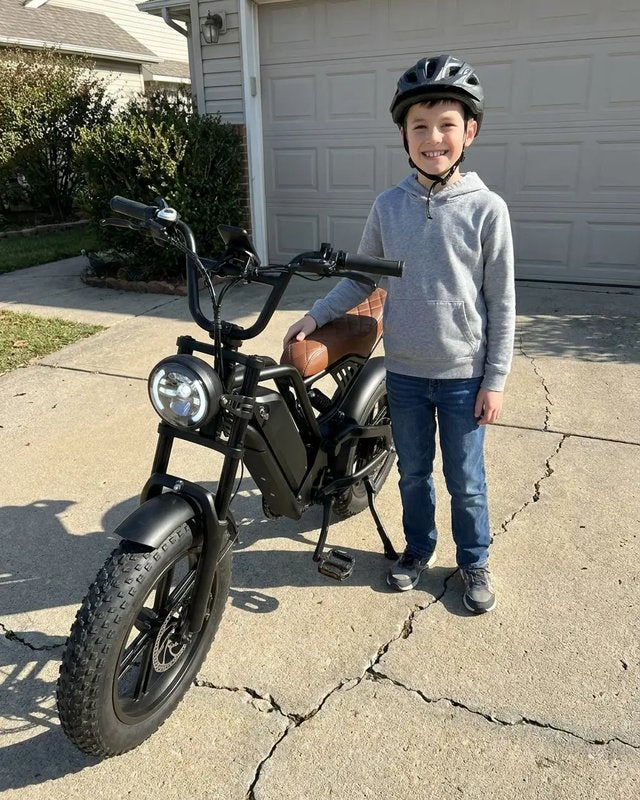
Electric bikes for children

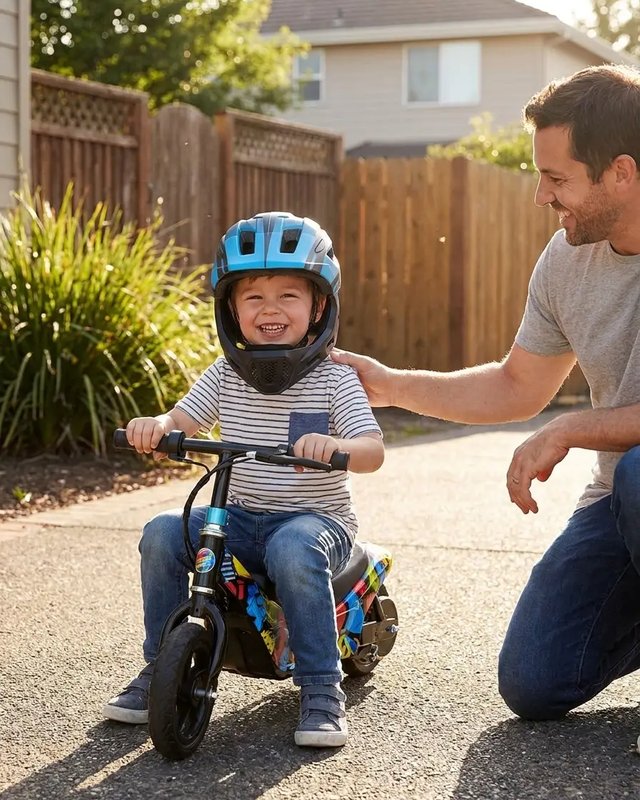
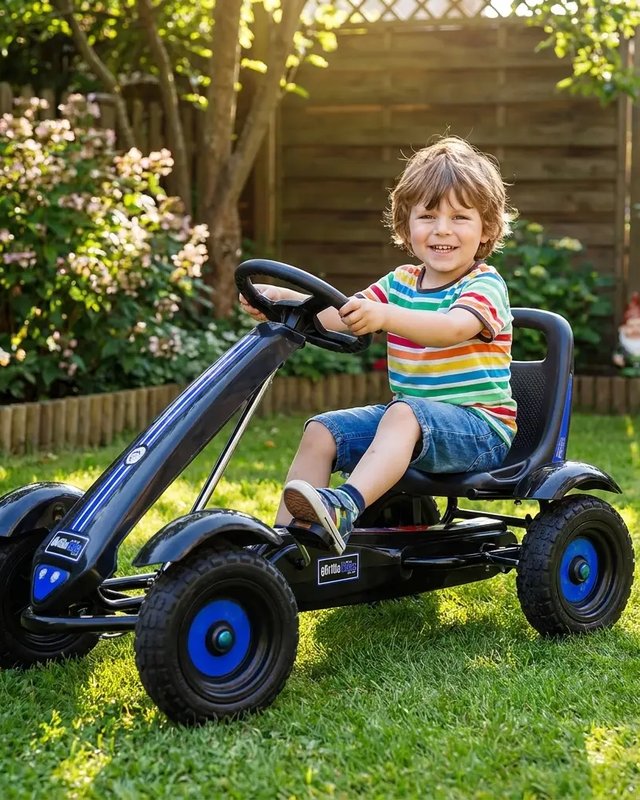
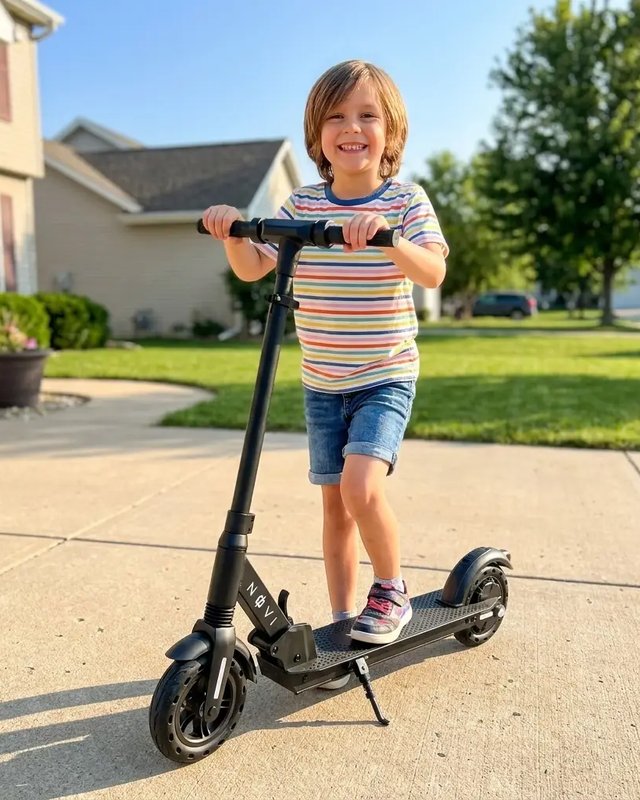
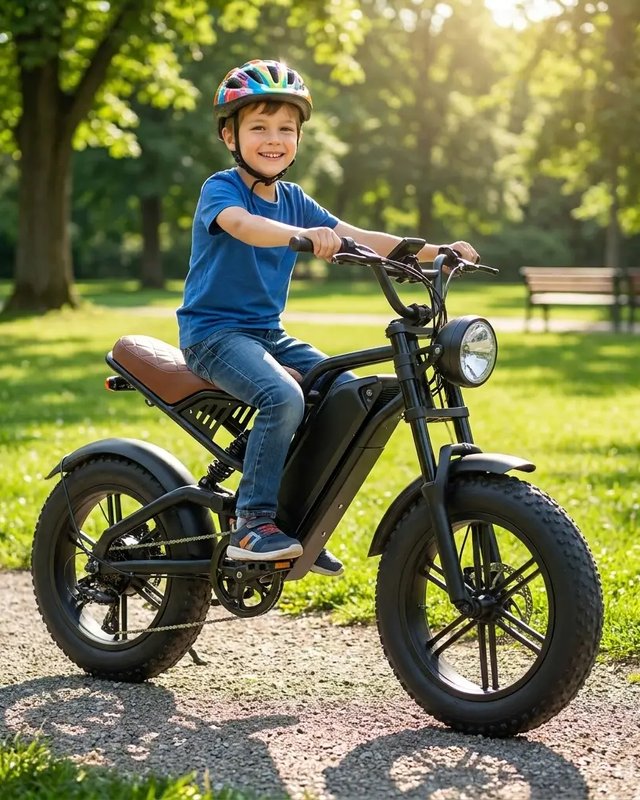
From a first ride-on for a four-year-old up to bikes a twelve-year-old will not grow out of in a season — with speed modes you set, so the first outing can be walking pace. Free delivery across Northern Ireland, or bring them into the Cookstown shop and we will size one up on the actual bike.

Two different kinds of bike here

It is worth knowing which one you are buying, because the rules are different.

Pedal-assist bikes have working pedals and a motor that helps while the child pedals. Provided the motor is 250W or under and assistance stops at 15.5mph, these count as ordinary bicycles in UK law and can be used where a bicycle can.

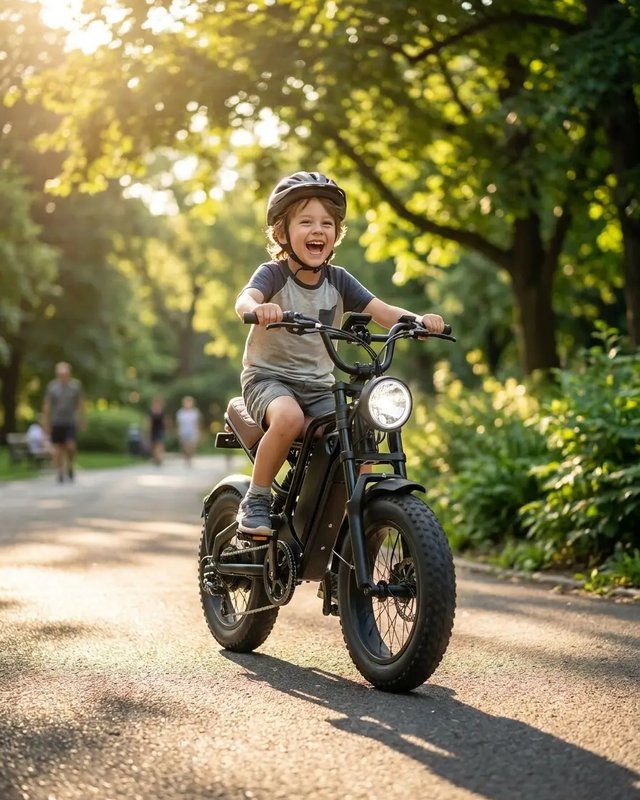
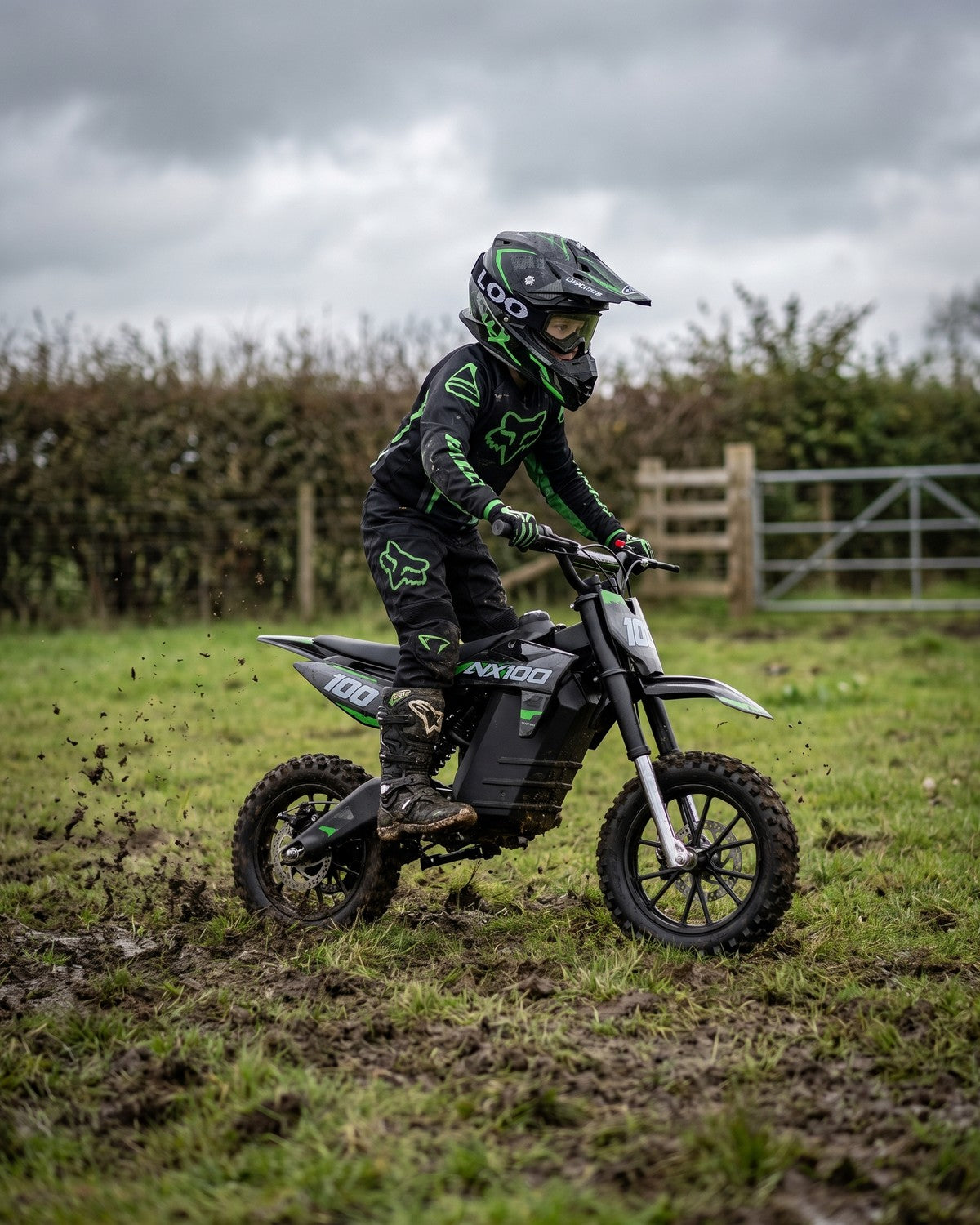
Throttle-controlled ride-ons — the chopper-style bikes and kids' electric motorbikes — have no pedals and are driven by a twist grip. These are for private land only, with the landowner's permission: not roads, pavements, cycle paths or public parks. Each product page states plainly which kind it is, and our guide to the Northern Ireland rules explains the difference.

You set the pace

Every bike here has selectable speed modes. Start at the lowest one — a week or two at a gentle setting builds more confidence than anything else, and there is somewhere to go as they improve.

Getting the size right

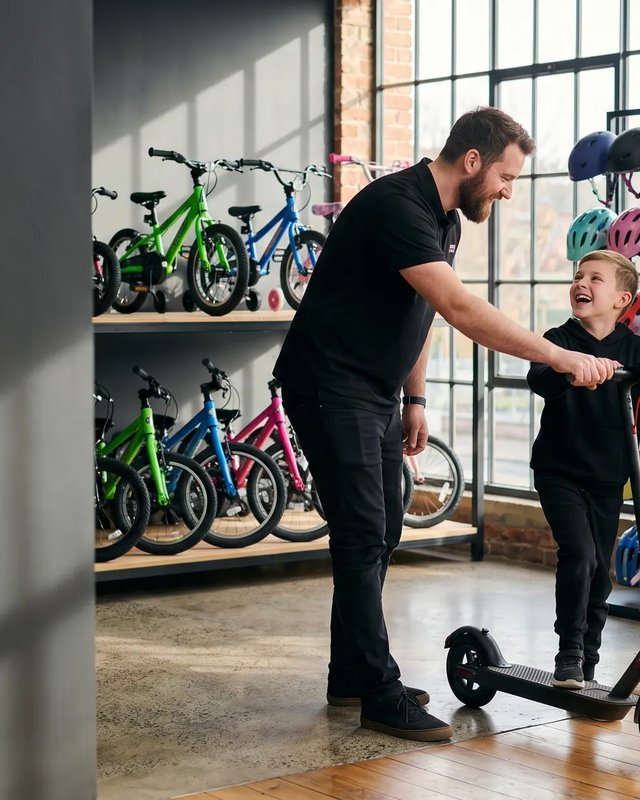
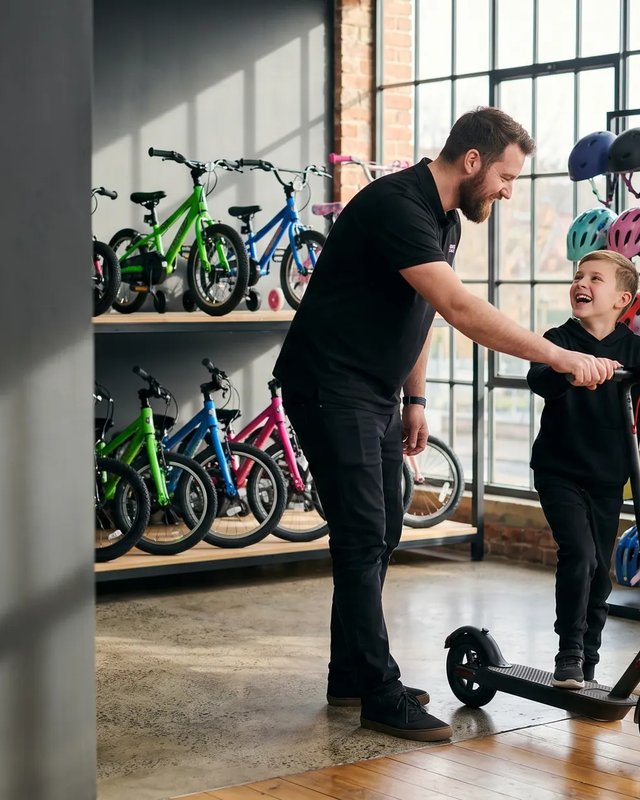
Height matters more than age. They should be able to get a foot down flat and comfortably when they stop, which is what decides whether a child feels safe on a bike. Every page gives a height guide alongside a rough age, and if they are between sizes, call in — two minutes on the real bike saves a return.

What we would send with it

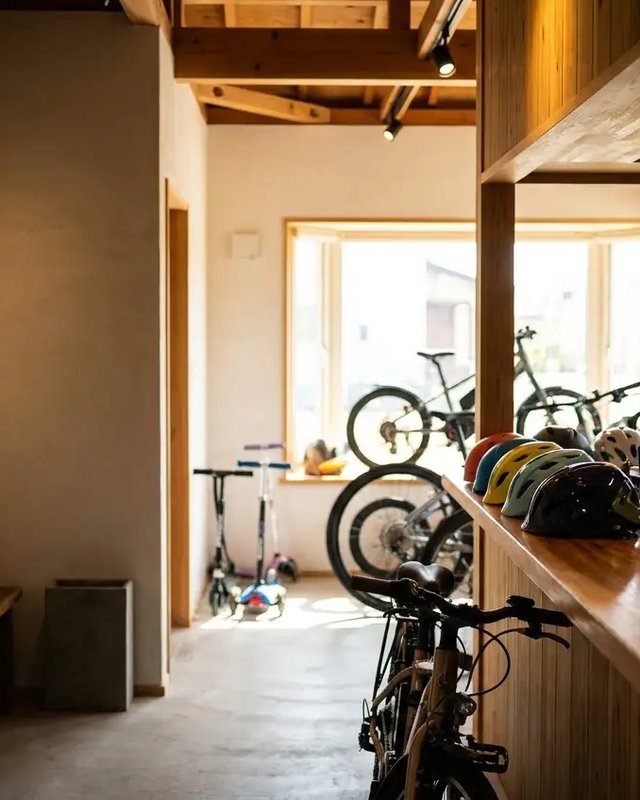
A helmet that actually fits, every time. We stock them and we will check the fit at the counter.

Backed by the workshop

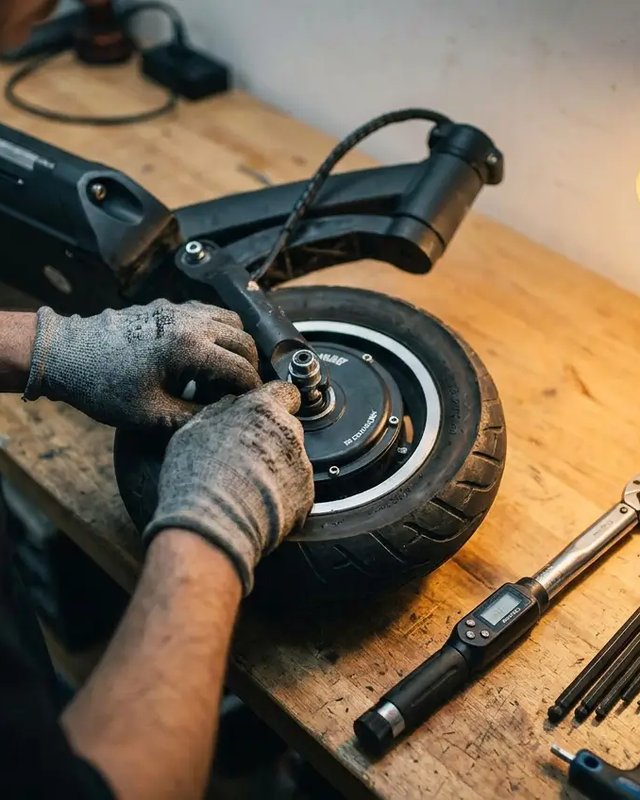
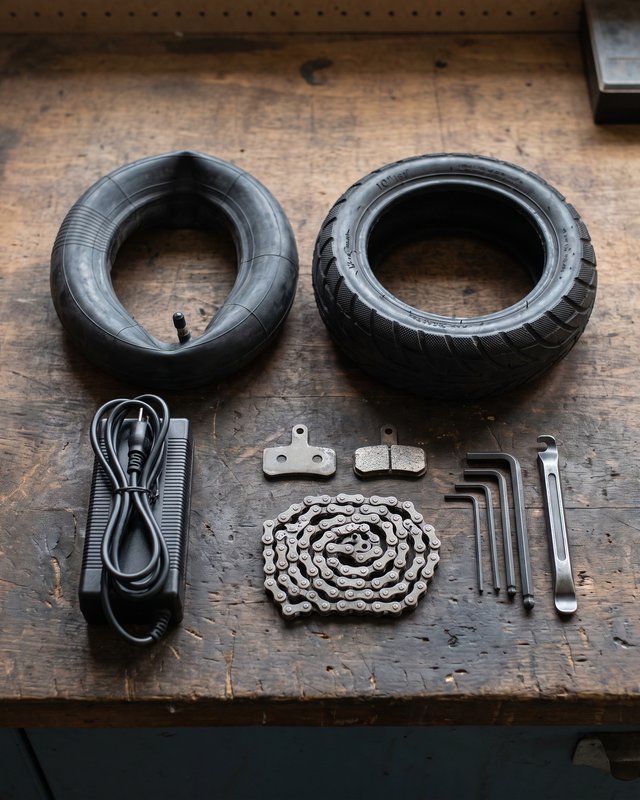
Every bike is built, checked and set up on our own bench in Cookstown before it goes out, with spares on the shelf and people you can ring who know it. Trading since 2006.


Down arrow Top arrow
border bottom black

Compare Products

use the arrow to choose product to compare.

Recently Viewed Products

FREQUENTLY ASKED QUESTIONS

Actually, “ebike” and “electric bike” mean the same thing — they’re just different ways of saying it.

Both refer to a bicycle equipped with an electric motor to assist pedalling or provide full electric propulsion.


It depends on the type of electric bike you have! In the UK, there are two main types of e-bikes with different pedalling rules.

Pedal-Assist E-Bikes (Pedelecs)

  • You have to pedal for the motor to provide assistance.
  • The motor boosts your pedalling effort up to 15.5 mph (25 km/h).
  • Once you stop pedalling or exceed the speed limit, the motor stops helping.
  • These are the most common type and are treated like regular bikes under UK law (no licence needed).


Throttle-Controlled E-Bikes

  • You can use a throttle (like a motorbike) to propel the bike without pedalling.
  • In the UK, these are classed as motor vehicles and require a licence, insurance, and registration.
  • They’re less common and generally not legal to use on public roads or cycle paths unless registered and insured as mopeds or motorcycles.


Most UK-legal electric bikes require pedaling to engage the motor.


No, you do not need L plates on a UK electric bike if it meets the legal requirements for an Electrically Assisted Pedal Cycle (EAPC) — which most common pedal-assist e-bikes do.

  • The e-bike’s motor only assists when you pedal (pedal-assist)
  • Motor power is 250 watts or less.
  • Motor assistance cuts out at 15.5 mph (25 km/h) or below.
  • The bike has working pedals and can be used as a normal bicycle.
  • The bike is used on public roads and cycle paths.


If your e-bike meets these rules, it’s treated like a regular bicycle under UK law, so no licence, insurance, registration, or L plates are required.


When you do need L plates:

  • If your electric bike can be powered without pedalling (i.e., throttle-controlled).
  • If it can go faster than 15.5 mph under motor power alone.
  • Then it’s classified as a moped or motorcycle, and L plates, insurance, registration, and a licence are required.


In the UK, the legal speed limit for a pedal-assist eBike (Electrically Assisted Pedal Cycle, or EAPC) is 15.5 mph (25 km/h).


If an eBike can go faster than 15.5 mph with motor power alone, it’s classified as a moped or motorcycle.


Most e-bikes do not charge their batteries as you ride — they use their battery power to assist you, but don’t regenerate energy during pedalling or braking like some electric cars or e-scooters with regenerative braking do.

  • Standard e-bikes: Battery drains as you pedal or use motor assist; you must plug in to recharge.
  • Regenerative braking: Some high-end or experimental e-bikes have regenerative braking systems that recover a small amount of energy when slowing down or going downhill, but this usually adds only a little extra range.
  • This tech is rare in consumer e-bikes because it adds weight, cost, and complexity.


You still need to charge your e-bike battery from a power outlet regularly; pedalling doesn’t recharge it.


E-bikes actually use very little electricity compared to many other electric vehicles, making them an efficient and eco-friendly transport option.

  • A full charge typically consumes about 0.3 to 0.6 kilowatt-hours (kWh) of electricity.
  • On average, an e-bike battery is around 300 to 600 watt-hours (Wh).
  • Charging an e-bike battery fully usually costs just a few pence (a few cents) depending on your local electricity rates.
  • If you ride daily, the monthly electricity cost is typically less than £1–£2.


Pedal-assist e-bikes provide motor help up to 15.5 mph (25 km/h). So you can reach and maintain this speed more easily, especially uphill or against wind. You can still pedal faster than 15.5 mph, but the motor won’t assist beyond that speed. Compared to a non-electric bike, you’ll likely feel less tired and can keep a steady pace longer.


No, in the UK you do not need a licence to ride a legal electric bike (an Electrically Assisted Pedal Cycle or EAPC) if it meets these rules:

  • The motor assists only when you pedal (pedal-assist).
  • Motor power is 250 watts or less.
  • Motor assistance stops at 15.5 mph (25 km/h).
  • The bike has working pedals and can be used as a regular bike.


If the e-bike has a throttle and can be powered without pedaling, or can go faster than 15.5 mph under motor power alone, it’s classified as a moped or motorcycle. Then you do need a licence, insurance, and registration to ride it legally on public roads.


Yes, electric bikes are legal in the UK as long as they meet specific requirements set by the law. These are known as Electrically Assisted Pedal Cycles (EAPCs).


If the e-bike can be powered solely by the motor (throttle-controlled) or goes faster than 15.5 mph under motor power, it’s classified as a moped or motorcycle. Then it needs licence, insurance, registration, and must follow moped/motorcycle laws.


Top black border shape

GET READY TO RIDE

Kids Electric Dirt Bikes in Northern Ireland: Which Size, Speed and Age?

Kids Electric Dirt Bikes in Northern Ireland: Which Size, Speed and Age?

The short answer: for most 8 to 14 year olds, the Novi NX100 (£599) is the one to look at...

Why BERG pedal go kart!

Why BERG pedal go kart!

Looking for an exciting and affordable alternative to Berg pedal go kart? Consider a pedal go kart from another brand,...

Hoverboards Northern Ireland Why shop with us?

Hoverboards Northern Ireland Why shop with us?

Are you in the market for a hoverboard in Northern Ireland? Look no further! Our shop offers a wide range...

Best Hoverboard Shop in Northern Ireland: Gorilla Karts

Best Hoverboard Shop in Northern Ireland: Gorilla Karts

ooking for the best hoverboard shop in Northern Ireland? Look no further than Gorilla Karts! As one of the leading...

Are Electric Scooters Legal in the UK? The Rules in 2026

Are Electric Scooters Legal in the UK? The Rules in 2026

Last checked 26 August 2026 The short answer. It is legal to buy an electric scooter in the UK, and...

Benefits of E-Scooters for Daily Commuting

Benefits of E-Scooters for Daily Commuting

E-scooters have transformed the way people commute, offering a clean, efficient, and low-cost alternative to traditional transport. For short to...

Electric Ride-Ons: Fun Gifts for Kids

Electric Ride-Ons: Fun Gifts for Kids

Electric ride-ons like mini scooters and e-bikes are becoming popular gift choices for birthdays and holidays. They offer a blend...

Choosing the Right E-Bike for Beginners

Choosing the Right E-Bike for Beginners

If you're new to electric bikes, selecting the right one can feel overwhelming. From motor types to frame sizes, there’s...

Why Adults Are Choosing Electric Scooters

Why Adults Are Choosing Electric Scooters

Electric scooters aren’t just for kids anymore—they’ve become a practical and trendy choice for adults on the go. Compact and...

Are Electric Scooters Safe for Kids?

Are Electric Scooters Safe for Kids?

Safety is always a top concern for parents, especially when it comes to electric scooters for kids. Fortunately, many scooters...

Top Electric Scooters for Kids in 2025

Top Electric Scooters for Kids in 2025

Electric scooters are fast becoming a favorite among kids, offering a fun, engaging, and tech-savvy way to play outdoors. Modern...

Best Electric Bikes for Urban Adults

Best Electric Bikes for Urban Adults

For adults navigating busy urban streets, electric bikes offer a convenient, low-maintenance alternative to cars and public transportation. They’re equipped...